
You cannot manage what you cannot see.
The money leaves either way. What nobody can tell you is which building took it, or which machine.
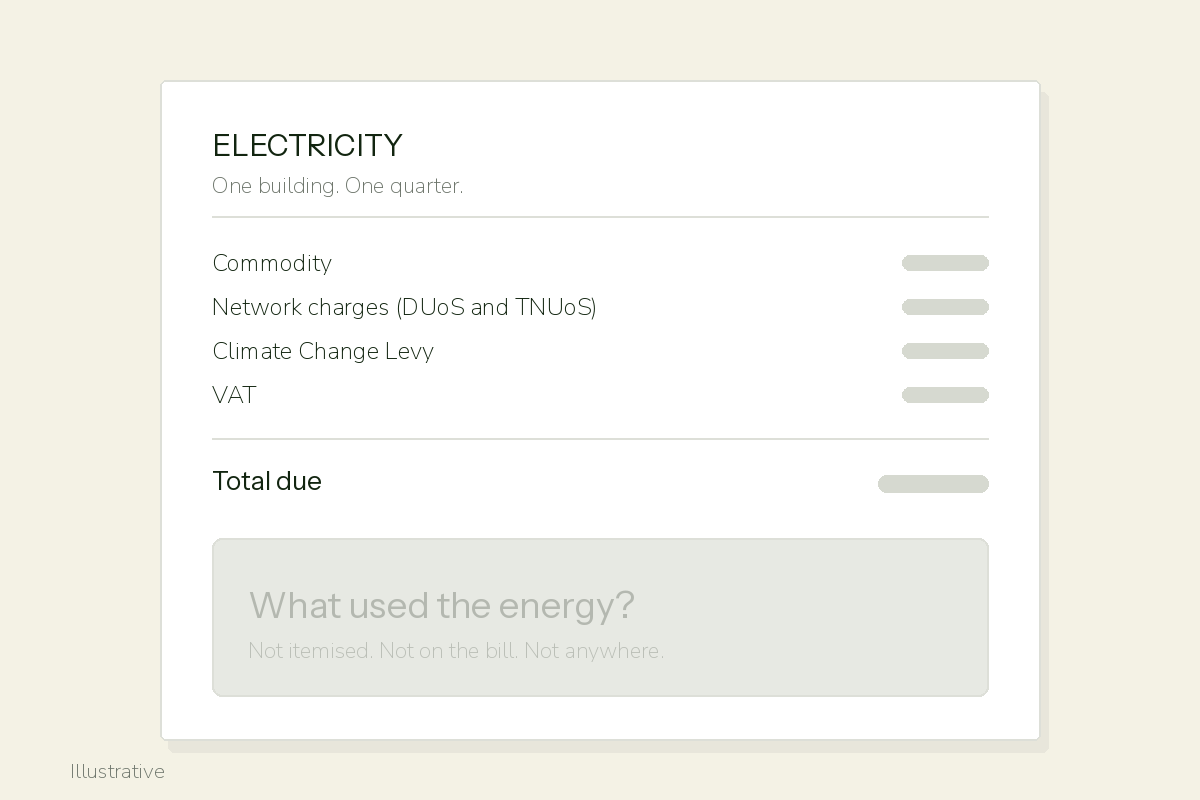
The bill itemises every charge: commodity, network costs, the levies, taxes, CCL and VAT. All of it explained, and none of it telling you what used the energy. So it gets paid, the budget absorbs it, and the same thing happens next month.

What a bill never tells you
Faulty equipment runs for weeks
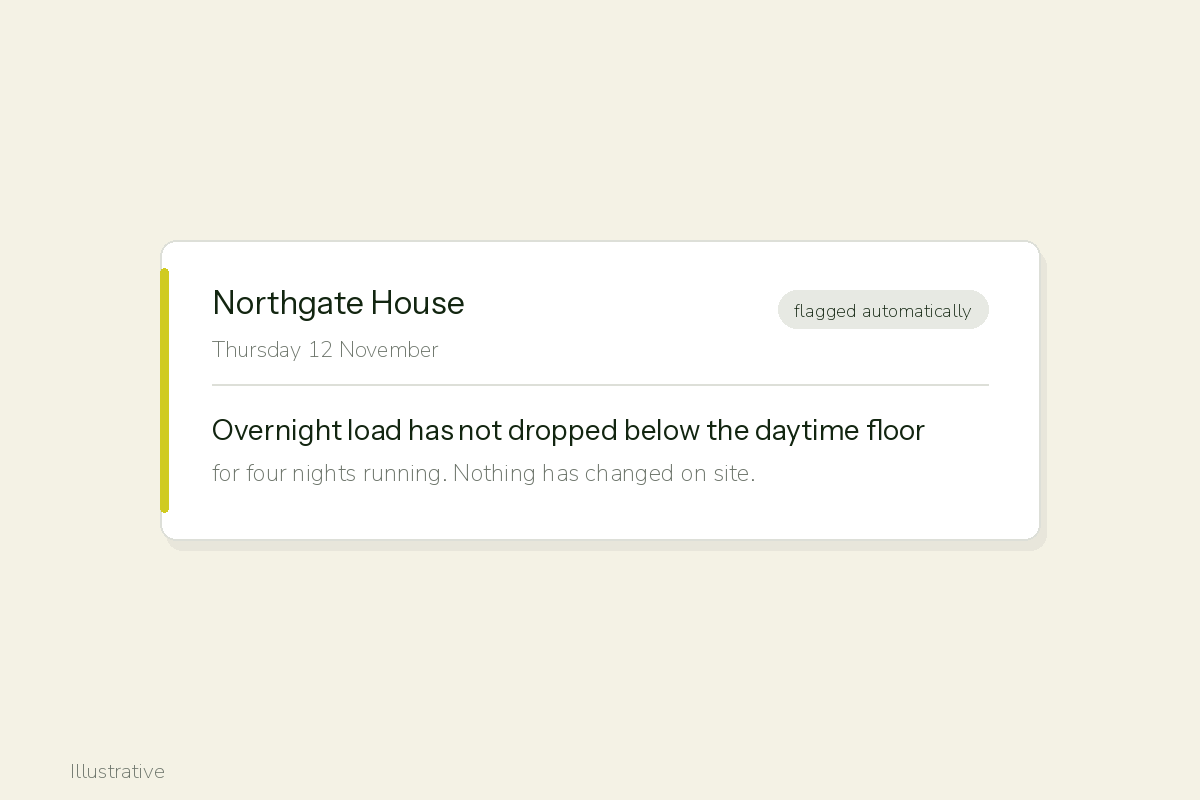
A failed control or a stuck valve burns money quietly until somebody happens to notice something wrong with the room.
Heating runs all night
The building is empty and the plant is still working. Nobody switched anything on, so nobody thinks to switch it off.
Something changes on a Tuesday
You find out at the end of the quarter, by which time it has been paid for three times over.
What it looks like working
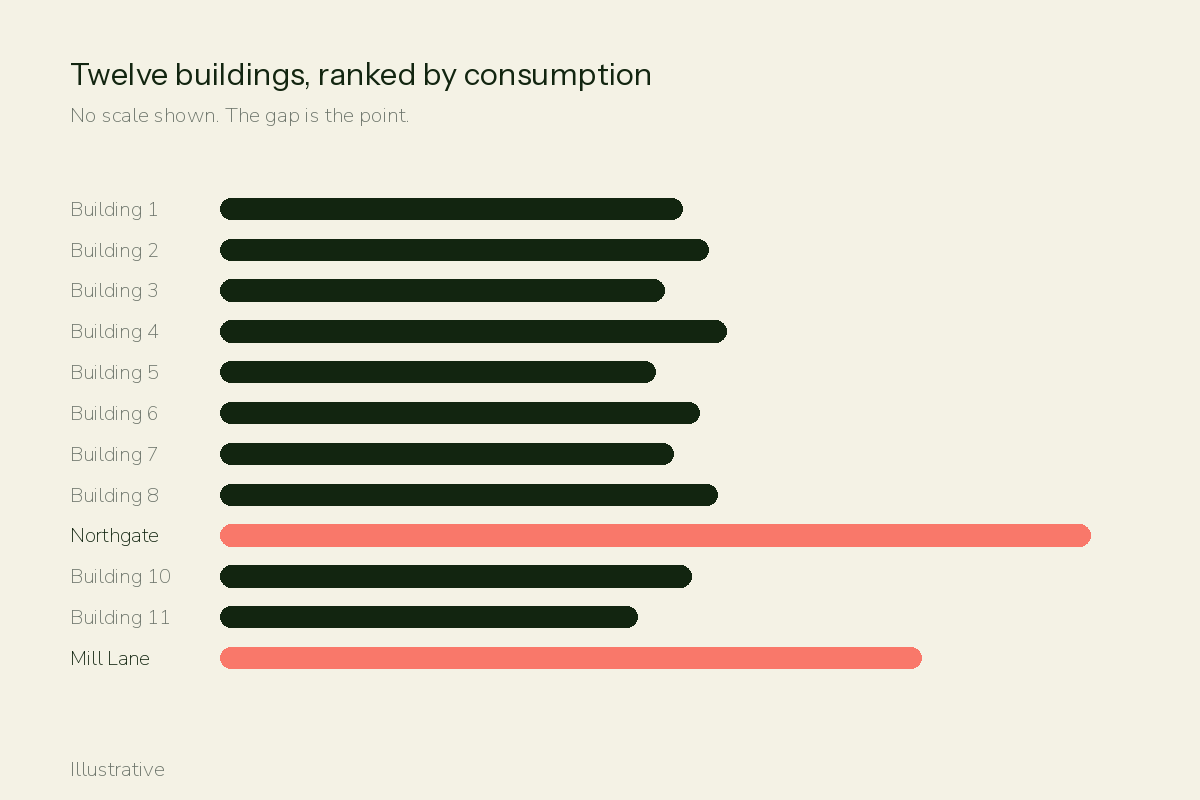
Enerlyse takes the meter data you already have and turns it into clear visual prompts on a screen. Any building, any half hour, and you can interrogate it yourself.
No spreadsheets to build. No waiting for somebody to send you a report.
You open it, you see what happened, and you decide what to do about it.


What you get out of it
Same day, not end of quarter
Exception reports reach you automatically the moment something changes, so you hear it while it is still fixable rather than after the invoice.
Billing errors caught before you pay
Bill validation is built in. Charges get checked against what the meters recorded, so an error gets questioned rather than absorbed.
Confidence in the budget
You can be confident your energy budget is not being blown by a faulty plant room or a heating system nobody switched off.

Proving it worked
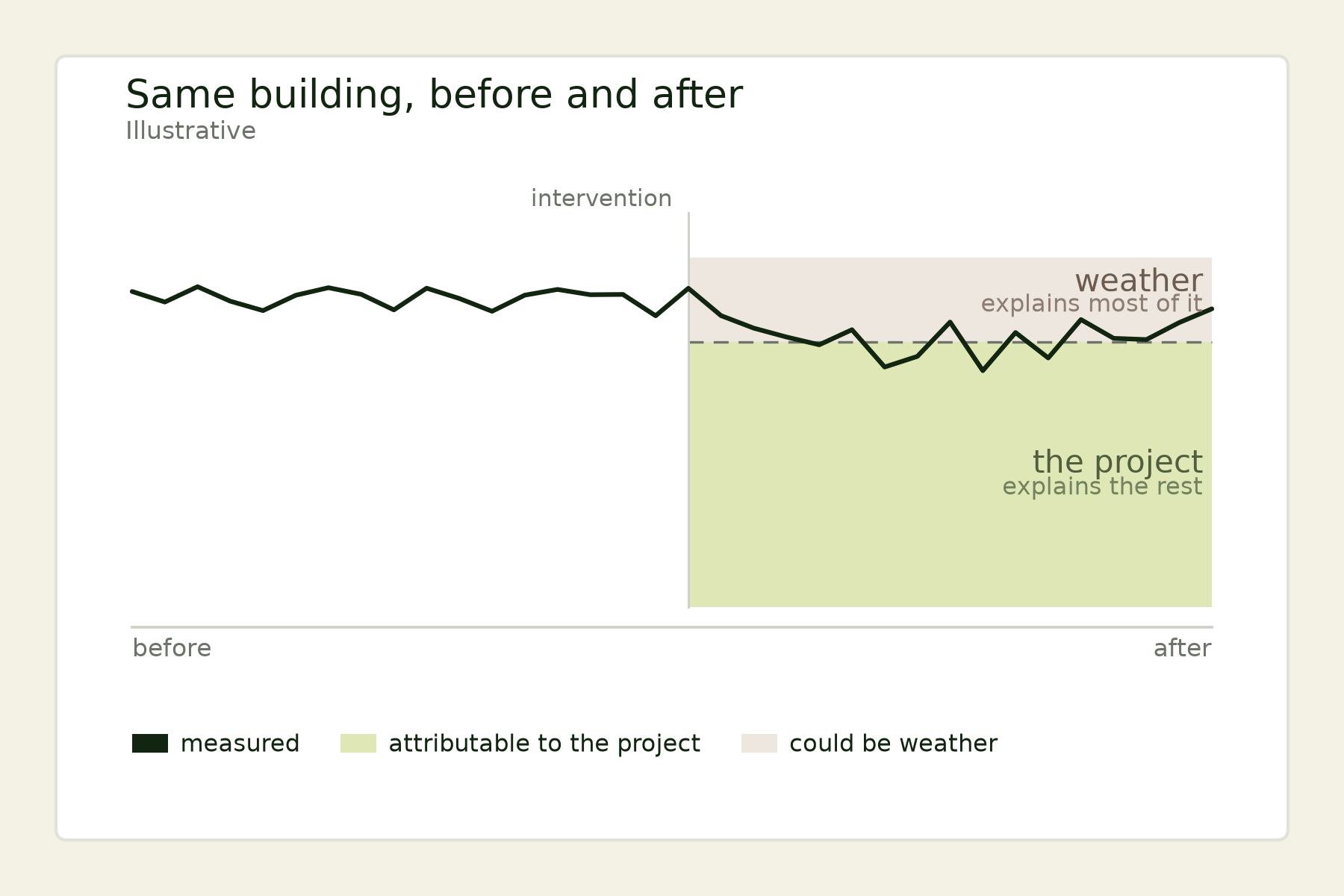
When you pay for solar PV or new controls, can you prove it delivered?
Most sites cannot, and not for want of trying. Two things are usually missing. There was no baseline taken before the work started, so there is nothing to measure the result against. And there is no way to strip out the weather and the trading conditions afterwards, so a mild winter or a quiet quarter can make almost anything look like it worked.
That matters most when the bill lands. If a contract ties a fee to an agreed target, you want to prove whether the target was met, before the supplier is paid for hitting it. Measurement and verification does that with a baseline, a method and the numbers behind it, so the decision rests on evidence rather than on the supplier telling you it worked.
That work is ours, and it is the same data read properly. It is why a baseline is worth taking before anything is installed, rather than reconstructed afterwards.
Half-hourly is coming for every meter
Every electricity meter in Britain is moving onto half-hourly settlement. In plain terms, the settlement between suppliers stops working on an estimate of a typical day and starts working on what was actually used in each half hour. Your meter readings and your bill do not change because of this. What changes is the accuracy behind the settlement, and the fact that half-hourly data starts existing for every meter in the country.
It is already happening. Elexon's programme position is that 8.4 million meters had moved by 14 May 2026, more than a quarter of the roughly 33 million in total, with a target of 80% by October 2026 and every meter transitioned by May 2027. The final switch to the new settlement timetable follows in July 2027.
From that point on, half-hourly data on what each building used exists for every site, whether anyone asked for it or not. Most organisations will do nothing with it. That is the open door, and it is worth saying plainly.
The things people ask before they ring
We already have a broker
Keep them. We do not sell energy, so nobody here is trying to take that relationship off you. What we do is check what you were charged against what the meters recorded.
We had an audit and nothing happened
An audit is a report. It describes a week, then it goes in a drawer. This is the data behind it, every month, so you can see what has changed since.
Nobody has time to look at data
Enerlyse spots the exceptions and emails you when there's something to look at. You don't need to watch the data yourself.
We are mid-contract
Nothing here needs a contract change. The findings are ready for the day your renewal comes up.
We do not have half-hourly meters
Soon you will. Market-wide Half-Hourly Settlement is moving every electricity meter in the country onto half-hourly settlement, with the migration completing in May 2027. When that lands, the data exists for every site whether you asked for it or not. Until then we fit extra meters and sub-meters where it is worth doing, and feed them into Enerlyse. So the answer is either already true, or about to be.
It is a cost we have not budgeted for
£14 a fiscal meter a month, £7 a sub-meter, and £30 per building to set up. If you qualify for the charity rate, every rate is 30% lower. Where capital is the blocker for the work that follows, PowerPacks exists for that.
Procurement is already handled
Nobody checks whether the price you signed matches what the buildings actually used. That check is ours.
Is this worth doing on a site our size?
You pay per meter, so a site with two meters pays for two. There is nothing to sign up to for a first look.
We already see our data in the supplier's portal
And it is worth looking at. A portal shows what your meters recorded, which is not nothing. What it does not do is tell you what drove the number, or flag an out-of-hours change on its own, and it only ever covers the meters that supplier bills. If you have more than one supplier, you are looking at part of the picture.
The landlord pays, we never see the bill
You can still see the consumption. That is usually how a tenant finds out what is being passed through to them, and whether the service charge reflects what the building actually used.
So is this a sales pitch for your projects?
No. The first look costs nothing and the findings are yours. You can act on them yourself, hand them to a contractor, or do nothing at all. Projects and PowerPacks exist for when you do want the work done, and we will tell you plainly that is what they are for.
We have a BMS, it already does this
A building management system runs and schedules the plant, and it does that job well. What it does not tell you is whether the building is using more than it should, and it will not prove a saving to anyone who asks. The two work together: the BMS controls, the data shows you where to point it.
We did monitoring before and nothing changed
That is the commonest version of this conversation, and the reason is usually that the data arrived and then nobody acted on it. Here the data tells you what changed, and we deliver the fix as well as find it: we design and specify the works independently, then project manage and cost manage delivery in house, so you have one point of contact and one party accountable.
Stuck on something? The support page has the answers to the common ones.
No cost, no obligation
Show us the buildings. We will show you what they are doing.
Tell us roughly what you have and we will come back within one working day. If there is nothing in it for you, we will say so.
Rather talk it through? Call 01484 958761.
Hawley Energy is an independent energy consultancy. Enerlyse is our energy monitoring, reporting and bill validation service. Metering on its own doesn't save energy. It shows you where it's going and what it's costing. The saving comes from acting on what it finds, which is the part we do with you.
Eleven years of finding what buildings waste.
The cheapest source of capital is the energy you are wasting.