
Managed charging
Use existing capacity carefully
Charging can be controlled to stay within agreed limits and make better use of power when the building has headroom. The design still needs to reflect how many residents may charge at the same time.
EV charging / Residential landlords
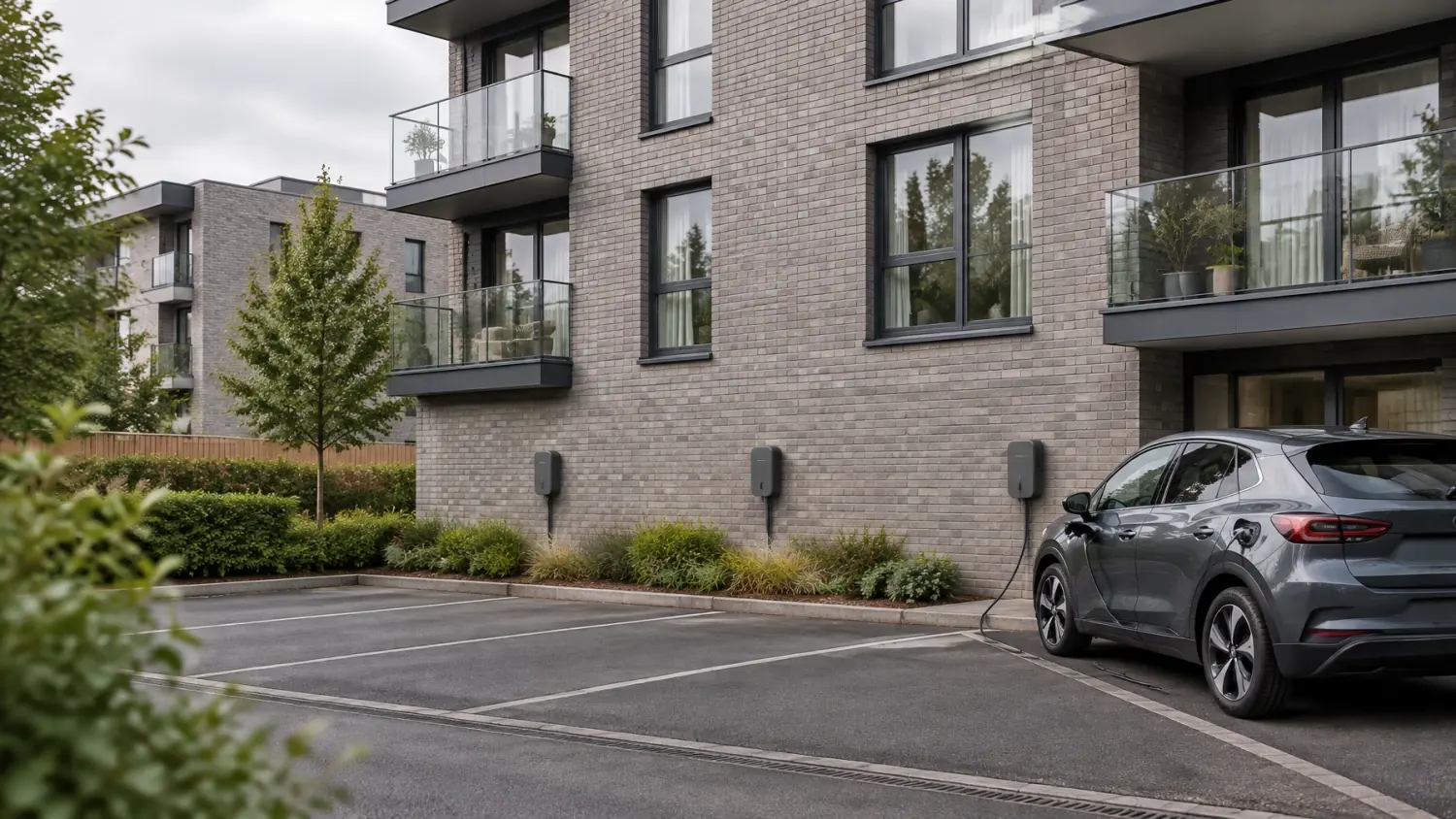
Adding EV charging to a block or housing estate takes more than choosing chargepoints. The building’s available electrical capacity, network connection, parking, resident demand and billing model all shape what will work.
Start with the supply
Many buildings do not have as much spare electrical capacity as people expect. The agreed maximum import capacity is shared with the building’s other demands, and adding several chargers can exceed what the existing connection can support.
A load assessment helps show what is already using power and when. From there, a design may use managed charging to share capacity, stage the rollout, or seek additional capacity through the Distribution Network Operator (DNO). A DNO application can take time and may involve network work and extra cost, so it is better to understand the position before equipment is selected or promised.
Managed charging
Charging can be controlled to stay within agreed limits and make better use of power when the building has headroom. The design still needs to reflect how many residents may charge at the same time.
DNO capacity
Where the available supply is not enough, we can assess the case for a DNO application and coordinate the enquiry. A capacity increase is not guaranteed and can affect cost and programme.
Funding, with the full cost in view
As of November 2026, eligible residential landlords can apply for the Electric Vehicle Chargepoint Grant for Residential Landlords. It covers up to 75% of eligible purchase and installation costs, capped at £500 per socket, for up to 200 sockets per year. The scheme is currently scheduled to close on 31 March 2027, and eligibility and application approval must be checked before work starts.
The Workplace Charging Scheme may suit eligible workplace or staff charging, with support of up to £500 per socket for up to 40 sockets. It is not a general grant for residential tenant charging. Three other OZEV schemes, including the commercial landlord chargepoint grant and residential landlord infrastructure grant, closed to new customer applications on 31 March 2026.
Residential landlord grant
Up to £500 per socket
75% of eligible costs, with a limit of 200 sockets a year. Subject to scheme eligibility, authorised installer requirements, application approval and the current closing date.
Workplace Charging Scheme
Up to £500 per socket
For eligible workplaces and staff or fleet charging. It is not a general subsidy for chargers serving residential tenants.
Do the numbers first
Funding is not automatically a saving.
Applications require evidence, eligible equipment and an approved process. Grant conditions can affect the installation route, while the ongoing cost of electricity, service and billing still has to be recovered.
Application effort, timing conditions and project requirements all have a cost. Tenants may also pay more per unit for charging than they would for electricity at home, depending on the tariff and billing model. If that makes the service poor value or reduces take-up, a grant may not justify the administration. Compare the grant with the full installation, operating and tenant cost before deciding.
Grant information checked against GOV.UK guidance available in November 2026. Schemes and eligibility can change; confirm current terms directly with the Office for Zero Emission Vehicles and an authorised installer before relying on funding.
From first question to live service
We help landlords plan an EV charging service that fits the property, the available power and the people who will use it. We can design the solution, handle the DNO process, specify and supply chargepoints, then arrange installation and billing.
01
We look at the parking layout, existing electrical infrastructure, likely charging demand and the way residents will use the bays.
02
We assess the building’s agreed supply capacity and work with the Distribution Network Operator (DNO) to understand what is available and what an upgrade could involve.
03
We compare a staged rollout, managed charging and any necessary supply upgrade, then specify a solution suited to the site and its future needs.
04
We specify and supply suitable chargepoints, coordinate the installation with the chosen delivery team and help keep the work moving.
05
We help arrange access, billing and usage recovery so residents can charge and the landlord can see how the service is being used.
Plan the whole service, not just the hardware
Tell us about the property, its parking and what you want residents to be able to do. We will help you work out a practical next step.