
Session resources / Brighouse
 Created for WYMS
Energy decisions for manufacturers.
Resources from Hawley Energy’s session with West Yorkshire Manufacturing Services. Everything on this page is here to help you look at your own site’s energy use with evidence, and decide what to do next.
On this page
Before the topics
Does belief in climate change change the business case?
However you answered, the practical question stays the same. A well-chosen efficiency investment reduces energy use and emissions if climate change is real. If you do not believe it is, that same investment still reduces avoidable running costs.
Either way, each investment should stand on its own evidence: site data, technical fit, cost and expected savings. That is the approach this page takes.
Why energy is expensive, and what you can influence
Renewable generation has expanded, but gas-fired plants can still set the wholesale electricity price when they are on the margin. Gas is not the whole bill: network, policy and supplier costs matter too. Businesses cannot set the market price.
What a business can influence is the other side of the equation: how much energy it needs to buy, how effectively it is used, and how and when it is procured. That is where the rest of this page focuses.
01 / Start with the data
Monitoring and evidence
Before any technology or investment decision, get a clear picture of what the site actually uses. Half-hourly data shows when energy is used, where the peaks fall and what runs when nobody is watching.

- Read half-hourly electricity data to find out-of-hours use and demand peaks
- Validate invoices against contract terms and metered consumption
- Compare energy use against production output so quieter months are not mistaken for efficiency gains
- Keep the evidence: it becomes the baseline for every later decision
- Compressed air: leaks commonly waste up to 30% of compressed air generation (Carbon Trust) and fixing them can cut compressed air energy costs by up to 30%. Because compressors run against leaks even when no one is working, leaks often appear in half-hourly data as overnight and weekend load: check the HH analyser.
- Voltage optimisation: where an independent survey shows a site is supplied at the top of the permitted voltage band and has a high proportion of voltage-dependent loads, savings typically land in the 5 to 15% range. Savings depend on load mix: modern LED, ICT and VSD loads see little benefit, so results must always be confirmed by a site survey before any commitment. Survey discipline per VOICE (the Voltage Optimisation Industry Council for Excellence).
Takeaway resources
- Monitoring and evidence guidePDF / PDF, 2 pagesWhat half-hourly data shows about your site, and how to read it without jargon.
- Half-hourly data analyserSpreadsheet / XLSXDrop in your own data and see out-of-hours load, baseload and spikes.
- Bill checkerSpreadsheet / XLSXCompare your rates against the contract you thought you signed.
- Motors, drives and controlsPDF / PDF, 2 pagesWhere most of a factory’s electricity goes, and the drive fix that pays back first.
- Controls and behaviour: this week’s listPDF / PDF, 2 pagesThe Friday-afternoon list: doors, timers, leaks and setpoints, proven in your own data.
Video
Buildings lie: bills versus meters
Buildings lie: why the bill and the meter tell two different stories, and what the meter data actually shows.
02 / Heat in manufacturing
Heat: recovery, cascading and heat pumps
This audience knows the fundamentals of heat cascading and recovery. The harder question is which sources and demands are actually worth matching, by temperature, timing and location.
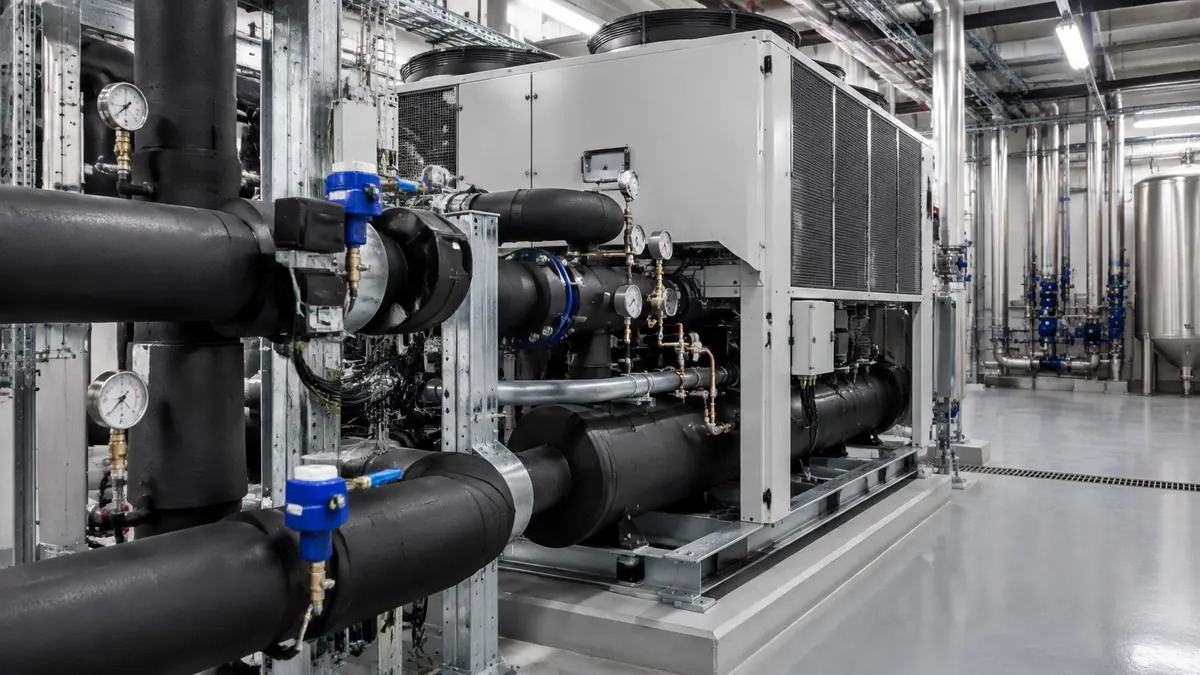
- Match usable heat sources to demands by temperature, timing and location
- Treat heat pumps as a site-specific decision: weigh emissions benefit against operating cost
- Check what additional electrical demand a heat pump would create, and when it would fall
- Assess whether onsite solar could serve part of that added demand
Takeaway resources
- Heat in manufacturing guidePDF / PDF, 2 pagesRecovery, cascading and heat pumps, with the questions that decide each one.
- Refrigeration and coolingPDF / PDF, 2 pagesThe 2 to 4% per degree setpoint win for chilled stores and food production.
- Heat assessment templateSpreadsheet / XLSXStructure your sources and demands so the match becomes obvious.
Video
Heat: the biggest line on your bill
Heat is usually the biggest line on a manufacturing bill, and the one everyone throws money at. Where that money actually goes, and what to question first.
03 / Onsite generation
Solar, batteries and flexibility
Size solar around what the site uses and when it uses it, not around how much roof space is available. Self-use, export and curtailment behave very differently across operating patterns.
- Match system size to demand profile and operating pattern, not roof area
- Understand self-use versus export, and what happens to surplus
- Assess battery storage against load profile, tariffs and site constraints
- Worth knowing: Australia and the Netherlands have both taken different approaches to charging for solar export. Context, not a UK prediction.
Takeaway resources
- Solar, batteries and flexibility guidePDF / PDF, 2 pagesWhat a solar array can and cannot do on your connection, before anyone quotes.
- Demand flexibility and time-of-usePDF / PDF, 2 pagesWhy when you use electricity starts to matter as much as how much, ahead of MHHS.
- Solar and battery specification outlineDocument / DOCXThe taster version of the site-ready template; the complete one is below.
Video
Sizing solar to demand
A short recorded guide to sizing generation around consumption rather than roof space.
04 / Supply and connection agreements
Supply agreements and connection agreements: why the connection matters
Two different contracts govern your electricity. The supply agreement sets what you pay for units. The connection agreement sets what your site is physically allowed to import and export, and it decides what solar can actually achieve.
- A supply agreement is with your electricity supplier: the contract for buying electricity (unit rates, standing charges). A connection agreement is with your Distribution Network Operator, Northern Powergrid for Brighouse and most of West Yorkshire, and defines the physical electrical contract for the site: your Agreed Import Capacity (often called MIC, maximum import capacity, in kVA/kW) and, where relevant, Maximum Export Capacity (MEC).
- Import: your site is billed for agreed capacity through availability charges whether or not you use it all, and exceeding agreed capacity triggers excess capacity charges. Many sites carry capacity agreed for load that no longer exists, paying for headroom they never use. Right-sizing it needs half-hourly data: the Monitoring and evidence download and the HH analyser tool in the pack.
- Export: export is limited by the MEC in your connection agreement, not by the size of the solar array. Installations up to 16A per phase (roughly 3.68kW single-phase or 11.04kW three-phase) can connect under the simplified G98 process. Larger systems need a G99 connection application and a connection offer from the DNO. Northern Powergrid quotes range from 5 working days for small low-voltage alterations up to 65 working days for extra-high-voltage works.
- A G100 export limitation scheme can cap export at 16A per phase to use the simpler route, at the cost of losing export above that cap. Where the local network is constrained (visible in the DNO’s embedded capacity registers), a full connection offer can mean cost or delay for the export capacity you would want.
- Here’s the bit people learn the hard way, too. If you’re ever changing that capacity, give some proper consideration to introducing limitations on the connection agreement, in case you need to increase it again in the future. Skip that, and going back a second time becomes very messy and very expensive.
- Power factor: poor power factor inflates kVA demand for the same useful load, which can raise capacity and excess-capacity charges; correcting it can allow a lower agreed capacity. Thresholds vary by DNO charging statement.
- Before quoting solar or battery on a site: check the connection agreement (MIC/MEC), check half-hourly import data against agreed capacity, and check the DNO’s capacity register for the local primary substation. The Solar and battery specification outline in the pack covers this, and we can run the DNO application work.
Takeaway resources
Video
Connection agreements explained
Two contracts govern your electricity, and most people only know one of them. What the supply agreement and the connection agreement each control, and why the connection decides what solar can actually achieve.
05 / Policy, obligations and schemes
MHHS, ESOS, BICS and the Supercharger
The rules around energy are changing, and several matter directly to manufacturers right now. People mix up two of these schemes all the time, so we cover them separately.
- Market-wide Half-Hourly Settlement: electricity settlement moves to half-hourly data for everyone, so the timing of consumption increasingly matters
- ESOS: the energy savings opportunity scheme applies to larger organisations and turns energy evidence into audit findings
- British Industry Supercharger: a separate scheme with its own eligibility, not the same benefits or criteria as BICS
- Connection capacity and electrification: changing processes or adding electrical loads raises questions about supply capacity
- Separately from ESOS, large companies must report their UK energy use and greenhouse gas emissions every year in their directors’ report under SECR: scope applies at two or more of £36m turnover, £18m balance sheet or 250 employees (quoted companies regardless of size), with an exemption for very low energy users (40,000 kWh or less).
Takeaway resources
- BICS Qualification ChecklistPDF / PDF, 2 pagesThe four qualification tests, key dates, ongoing obligations and the not-the-Supercharger distinction, on two pages.
- MHHS, ESOS and BICS briefingPDF / PDF, 2 pagesHow the three schemes fit together, and which one is likely to matter for your site.
- ESOS compliance pathwayPDF / PDF, 2 pagesPhase 4 qualification thresholds, deadlines and what a compliant audit looks like.
- Start the official BICS eligibility checkOfficial source / GOV.UK checker
Video
Schemes and obligations explained
A short recorded guide to MHHS, ESOS and the industrial schemes.
06 / Featured scheme
BICS: British Industrial Competitiveness Scheme
BICS is a separate scheme from the British Industry Supercharger, with its own eligibility and benefits. Its first application window is currently open, so eligibility checks and evidence are worth preparing now.
- Takes eligible manufacturers out of the indirect costs of three electricity levies, subject to the scheme rules.
- Illustrative benefit: £70,000 to £80,000 per year for a site using 2,000 MWh with 60% eligible production; £175,000 to £200,000 for a larger mixed site. Examples, not quotes: the £35 to £40/MWh range is the government’s published average saving.
- Check the published criteria against the site before assuming eligibility. Do not assume that being a manufacturer is enough.
- Applications opened on 1 October 2026 and the window closes on 30 November 2026. Use the official guidance and eligibility checker as the source of truth. Scheme decisions are made by the scheme administrator, not by us.
Takeaway resources
- BICS: the competitiveness schemePDF / PDF, 3 pagesThe electricity-levy exemption scheme: eligibility, pro-rating and worked benefit examples.
- BICS Qualification ChecklistPDF / PDF, 2 pagesThe four qualification tests, key dates, ongoing obligations and the not-the-Supercharger distinction, on two pages.
- MHHS, ESOS and BICS briefingPDF / PDF, 2 pagesHow the three schemes fit together, and which one is likely to matter for your site.
- Official BICS guidanceOfficial source / GOV.UK
- Start the official BICS eligibility checkOfficial source / GOV.UK checker
07 / From findings to action
Turning evidence into an investable plan
Findings only matter when they become decisions. So: rank the opportunities, check they actually fit your site and your budget, and build a plan the business can say yes or no to.
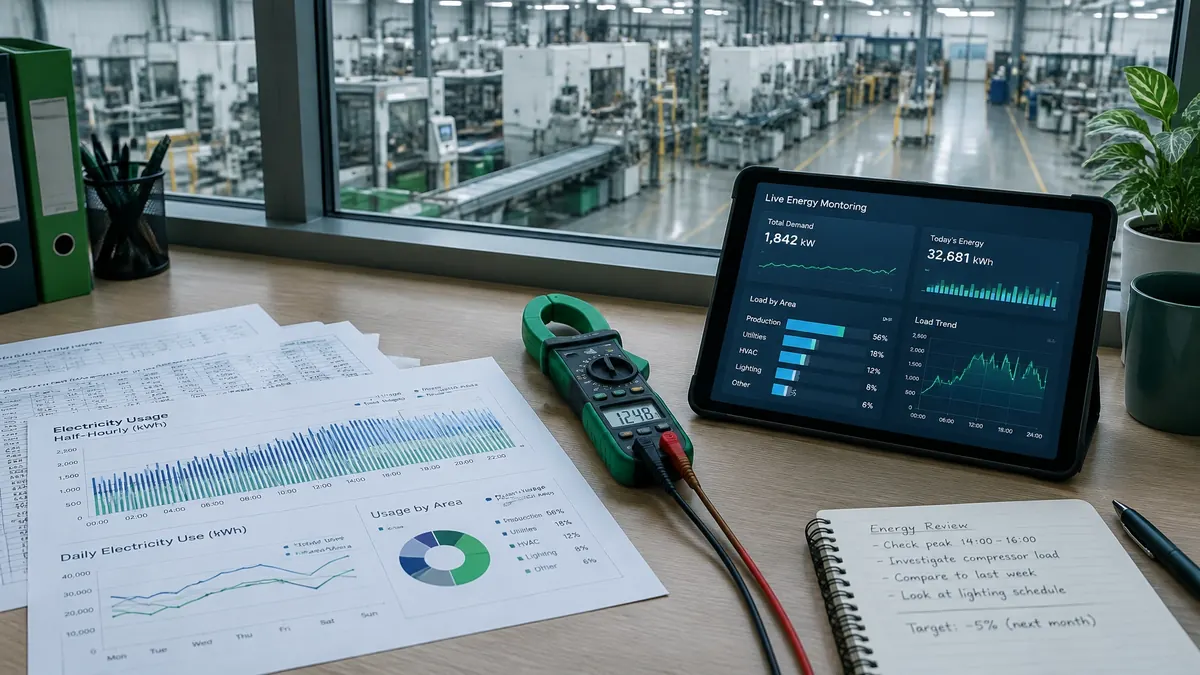
- Prioritise measures by impact, effort and evidence quality
- Check technical fit against site conditions and operating patterns
- Build the investment case: costs, expected benefit and the assumptions behind both
- Measure after delivery so expected savings can be compared against actual performance
- Energy procurement through Baseline Power: no hidden commissions, procurement windows chosen with precision, bill audits that recover overcharges
Takeaway resources
- From findings to action guidePDF / PDF, 2 pagesPrioritising measures, building the investment case and proving the savings after delivery.
- Buying electricity wellPDF / PDF, 2 pagesContract end dates, what is really in the rate, and the questions to ask before you sign.
- Project prioritiserSpreadsheet / XLSX
- Energy policy templateDocument / DOCX
Video
From findings to action
You’ve found something. Now what? From findings to action: evidence first, then spend, in the order that gets projects moving instead of stalling.
08 / Funding and support
Funding and support
Three routes that reduce the cost of acting on the evidence above: sector schemes, regional support and financing that does not stall at the capital question.
- Climate Change Agreements: energy-intensive manufacturers can join the Climate Change Agreements scheme through their sector association, cutting the Climate Change Levy on electricity by up to 92% (89% on gas). Applications are made annually: the next window opens on 1 January 2027. Source: GOV.UK CCA statutory guidance.
- West Yorkshire support: WYCA’s Energy Transition and Security programme (2026 to 2029) offers energy audits, resource efficiency assessments and carbon reduction planning for West Yorkshire businesses. Contact WYCA’s business support team to check current eligibility.
- PowerPacks: Hawley Energy’s flexible financing for energy projects, progress without heavy upfront costs.
The full pack
Session toolkit and guides
Every download from the session, no account needed. Take what is useful.
Guides (PDF)
- Monitoring and evidencePDF
- Heat in manufacturingPDF
- Solar, batteries and flexibilityPDF
- MHHS, ESOS and BICSPDF
- BICS Qualification ChecklistPDF
- BICS: the competitiveness schemePDF
- From findings to actionPDF
- ESOS compliance pathwayPDF
- Session action checklistPDF
- Motors, drives and controlsPDF
- Refrigeration and coolingPDF
- Demand flexibility and time-of-usePDF
- Controls and behaviour: this week’s listPDF
- Buying electricity wellPDF
Optional
Want the session pack emailed to you?
Everything on this page is freely available without an account. If you would like the pack by email and occasional relevant energy insights for manufacturers, leave your details.
About the organiser
West Yorkshire Manufacturing Services (WYMS) is a charity built by manufacturers, for manufacturers, supporting the future of manufacturing and engineering through workforce development, industry collaboration and business support. This session was delivered at Junction25 at WYMS, Brighouse. Find out more at wyms.co.uk.
If you want to see where your organisation stands, the energy health check is optional and takes a few minutes.
Questions in the meantime: 01484 958761 or andrew@hawleyenergy.co.uk
Event delivered by West Yorkshire Manufacturing Services (WYMS) · wyms.co.uk
Everything here was built by the team at Hawley Energy: monitoring and reporting through Enerlyse, procurement through Baseline Power, project design and delivery through Projects and PowerPacks, and compliance through ESOS and the BICS application service.
Procurement through Baseline Power · baseline-power.co.uk
The complete version
Solar specification: the complete site-ready template
The full seven-page specification template for solar PV, the complete version of the free outline in the pack. Leave your details below and we will email it to you.
Get the complete specification